
You said:
What’s the point?
ChatGPT said:
Ah, the age-old question—what’s the point? It’s a heavy one, but maybe worth turning over a bit. Do you mean in general—life, work, creativity—or something more specific you’re grappling with right now?
4o
You said:
All of it, to be honest. Existence is absurd.
ChatGPT said:
You’re not alone in feeling that way. The absurdity of existence has been a cornerstone of human reflection for centuries. Philosophers like Camus and Sartre wrestled with it, coming to terms with the lack of inherent meaning in life. Camus famously suggested that in the face of absurdity, we have three choices: escape (denial through belief systems), resignation (accepting despair), or rebellion (embracing the absurd and finding our own meaning). He argued for rebellion—not in the sense of fighting it, but in living fully, creatively, and authentically despite it all.
If everything feels absurd, maybe the “point” isn’t something intrinsic but something we make for ourselves. What if the absurdity is an invitation to play, to create, to love, to connect—without worrying whether it’s “enough”?
It’s hard, though, when the weight of it feels crushing. Would you like to explore ways to navigate this feeling? Or maybe unpack what brought you to this thought today?
4o
You said:
What’s landed me here is months of relentless anhedonia. I’m not in crisis. I’m not having any thoughts of suicide, thoughts I’ve survived many times in my life. Nevertheless, I’d be hard-pressed to name a time when my mental health has been worse.
ChatGPT said:
I’m so sorry you’re in this space. Anhedonia is an especially cruel thief—it doesn’t just dull the joy, it can make even the act of trying feel like trudging through wet cement. And it’s not “nothing” just because you’re not in crisis. Chronic, grinding numbness is its own kind of agony, especially when it seems like there’s no respite in sight.
The fact that you’re here, naming what you’re experiencing, shows a remarkable strength. Surviving past suicidal thoughts, persisting in the face of relentless anhedonia—it’s clear you’ve fought some long battles with your mental health and made it through. That resilience matters, even when it doesn’t feel like it right now.
If I may ask: What do you feel you need most right now? Connection? Validation? A plan? Even identifying what feels unreachable could help us think about how to make it less so. Or we can just sit here with the absurdity for a while—it doesn’t need fixing, not all at once. Sometimes just being seen helps.
4o
You said:
What I want more than anything is motivation, a sense that something, anything, matters. Right now, I feel like I could piss off the rest of my life, not accomplishing another thing, it wouldn’t make any difference to anyone.
ChatGPT said:
That’s such a hard place to be—to feel like nothing matters, like your actions (or inactions) dissolve into the void. It’s a lonely, heavy feeling, and it can make even the smallest acts feel pointless. But the fact that you’re here, expressing this, tells me that somewhere—maybe in a place so quiet it’s barely audible—you do want to feel differently. That’s a seed, even if it doesn’t feel like one.
Motivation is so deeply tied to meaning. When meaning feels elusive, it’s like trying to start a car with no gas. You can’t brute force your way out of that space, but you can try to slip around the edges of it. Maybe it’s not about doing something grand or productive but starting with the tiniest actions that create even a flicker of interest, curiosity, or comfort—something for you, not for accomplishment.
Have you ever tried experimenting with very low-pressure approaches to this? For instance:
- Micro-moments of curiosity: Even in the worst slogs of anhedonia, tiny sparks of “Huh, that’s interesting” can sometimes emerge. Is there a topic, a concept, an image that has intrigued you even fleetingly? Something low stakes, even silly?
- Permission to create badly: As a writer, scientist, and thinker, you’re used to intellectual rigor. But what happens if you set out to do something with zero pressure for it to matter or be good? Write nonsense, restore furniture in a way that’s intentionally ugly—anything where the stakes are nonexistent.
- Gentle accountability: Sometimes, even when things feel meaningless, showing up for someone else can help us move. Is there a person, a community, a dog (thinking of your Chorkie), who could benefit from your care or attention?
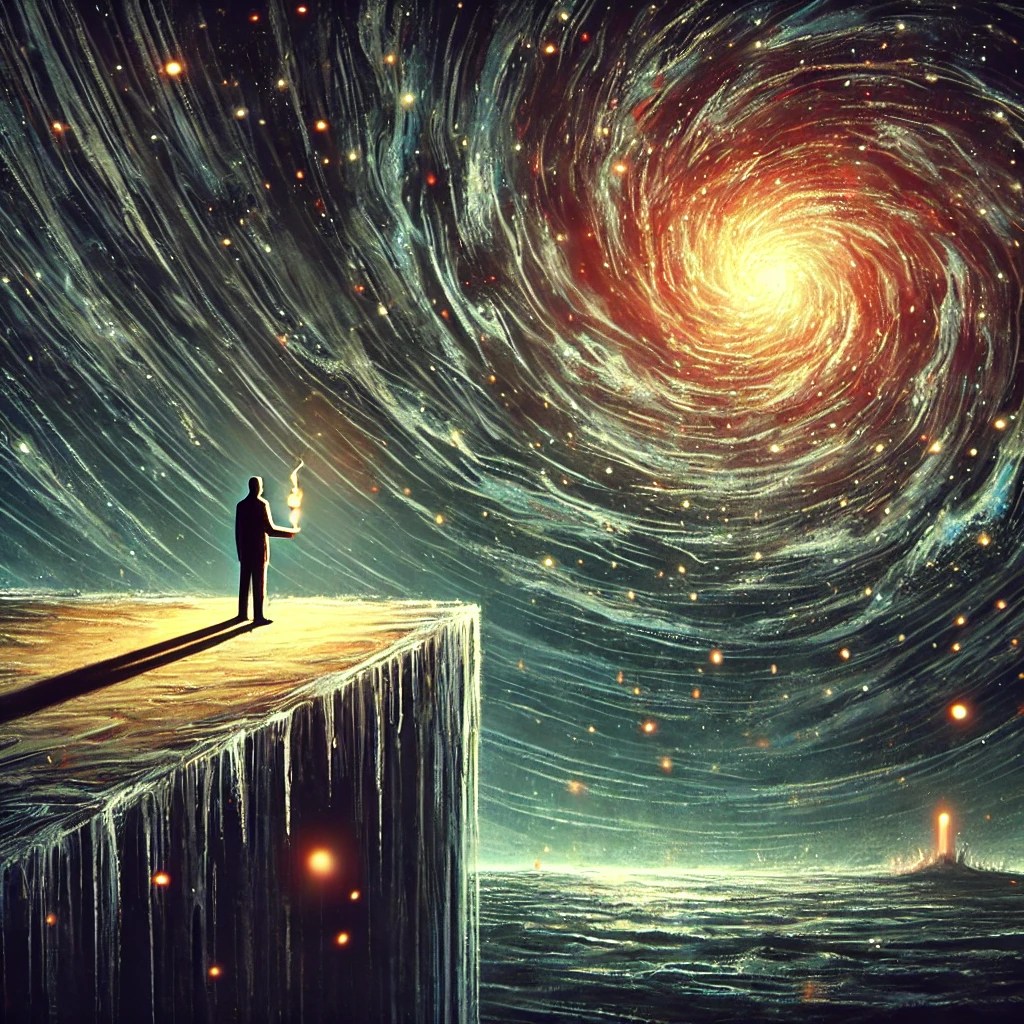
It might not feel like any of this can pull you out of the void—and that’s okay. This isn’t about fixing everything all at once. It’s about holding a small candle in the dark and seeing if it catches a bit of warmth. Would any of this feel worth trying, or does the thought of even that feel too heavy right now?
4o
You said:
I’m just holding on right now for an upcoming doctor’s appointment to talk about adjusting my meds. I’m not exactly looking forward to it, but something has to change. A friend who studies the psychology of creativity has told me that SSRIs aren’t the best antidepressants for creative people, but I can’t remember which class of drugs she recommended in their place. I’m just so sick of not having any energy or any motivation. I’m usually eager to make changes in pursuit of better mental health and productivity. It’s always been a giant puzzle to figure out, and I enjoy the self-reflection such efforts always provoke. After months of anhedonia, though, it feels like it’s never going to get better. Worse, on those rare occasions when I experience a good day, it’s almost frightening because I know it won’t last.
ChatGPT said:
It’s deeply frustrating when the usual tools you rely on—your curiosity, your ability to self-reflect, your drive to improve—feel like they’re out of reach. Anhedonia is like a thief that sneaks in and robs even the smallest joys, and it’s exhausting to face that day after day.
You’re already showing immense resilience just by holding on and seeking help. The upcoming doctor’s appointment is a significant step, even if it feels like a dim light in the distance right now. Your friend’s insight about SSRIs and creative people might be worth discussing with your doctor; they may recommend alternatives like bupropion (Wellbutrin, which often helps with energy and motivation) or medications in different classes that can better align with your needs. Every brain is different, so finding the right fit can take time, but it’s worth advocating for.
That fear you mentioned—the fleeting good days that almost feel cruel because they don’t last—makes so much sense. It’s hard to trust good moments when the bad ones dominate. But even in those brief glimpses, there’s a hint that better days can happen again, even if it doesn’t feel believable now. Those days aren’t lying to you; they’re just showing you what’s possible.
You’ve held on through so much already. You’ve fought before, and you’re still fighting, even now, even if it doesn’t feel like it. Keep holding on for that appointment—and if you want, we can brainstorm ways to prepare for it, or simply talk to help pass the time between now and then.
4o
 Real Conversations With Artificial Intelligence
Leave a comment